
Sheepdrove Organic Farm and Plantlife created habitiats for arable wildflowers on field margins. Arable wildflowers were once a familiar sight on farms. They play a crucial role in supporting other wildlife and add colour and beauty to the landscape. But their numbers have drastically declined due to modern agricultural practices – and they are now the most critically threatened group of wild plants in the UK. Three dew ponds have also been restored as part of the project at Sheepdrove, increasing biodiversity and providing important on-farm freshwater. Additional work included creating scrapes for planting locally rare juniper and arable wildflowers.
The project was part of our wider Partnerships for Nature programme, funded by Defra’s Species Survival Fund and administered by the National Lottery Heritage Fund. The programme restored and enhanced a range of important habitats for rare and vulnerable species throughout the North Wessex Downs National Landscape, and ran from 2024 until early 2026.
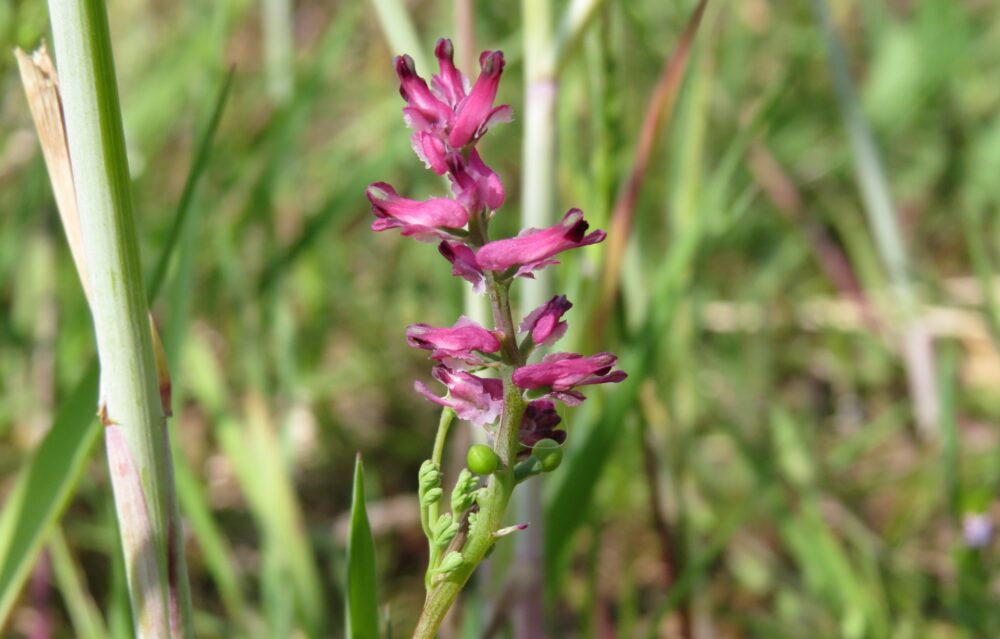
Small but mighty arable wildflowers
Roughly 120 species of rare and threatened wildflowers occur on arable land. Many were accidentally introduced to Britain thousands of years ago as a contaminant of crop grain. As agriculture spread across Europe from the Middle East so too did these so-called ‘weeds’.
As well as the larger and more showy poppies and cornflowers, there are many important smaller wild arable plants. They often have distinctive names – like shepherd’s-needle, weasel’s-snout, and night-flowering catchfly. They provide vital food and shelter for farmland birds like corn buntings and yellowhammers, pollinators such as butterflies and bees, and mammals including bats and harvest mice. They are also valuable in their own right, for example having potential for medicinal use.
Image: Fumaria densiflora, Lizzie Cooke
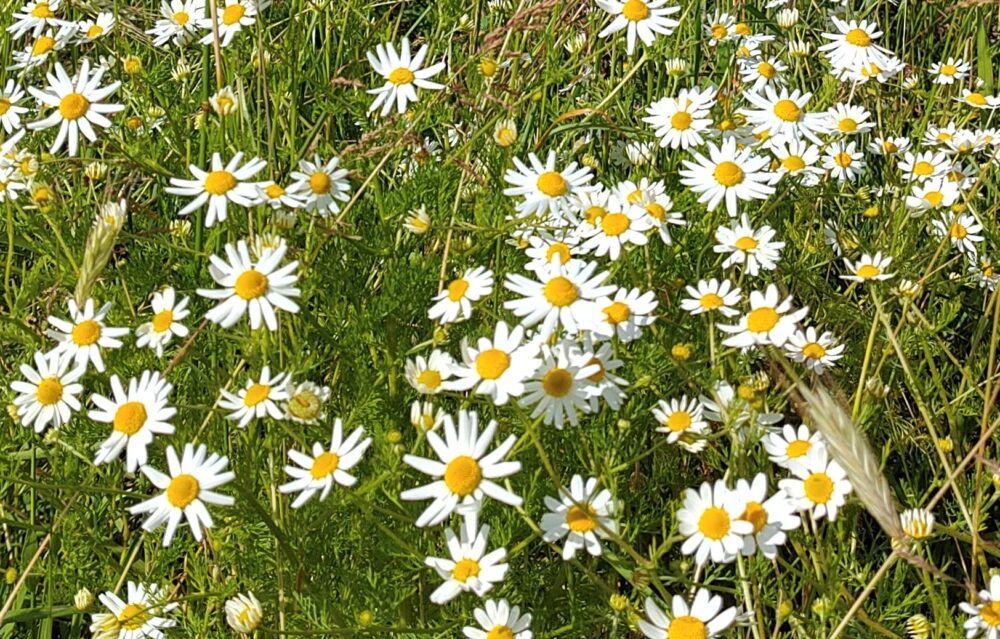
Arable plants at risk
For millennia, plants such as cornflowers, corn marigolds, and corncockles flourished under traditional practices like crop rotation and fallowing. As annual plants they also rely on regular soil disturbance from cultivation to trigger germination from the soil seed bank. Modern farming, however, has led to steep declines through herbicide use, artificial fertilizers, and more vigorous crop varieties that overshadow smaller plants.
Image: Stinking Chamomile, Lizzie Cooke
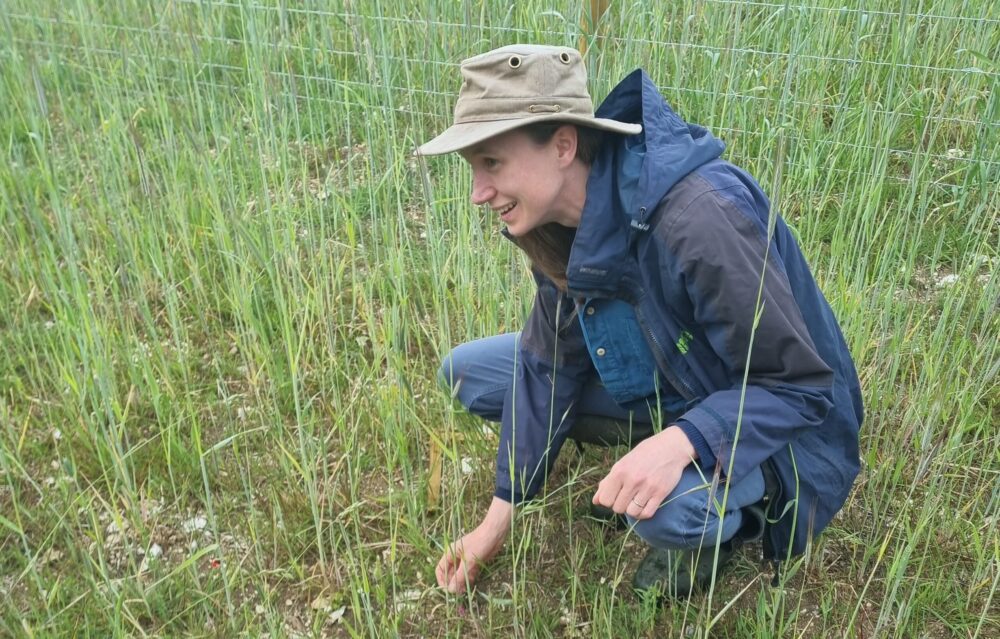
Helping arable wildflowers to thrive at Sheepdrove
Sheepdrove Organic Farm is already home to some nationally important and rare species. This project is increasing the number of arable plants by leaving cultivated field margins without sowing seeds. This process uncovers seeds from the seedbed through cultivation, and gives space for these seeds to grow without being crowded out by the crop plant. The project is drawing on expertise from arable plant expert Lizzie Cooke from Plantlife. She has been carefully monitoring species, helping to build up knowledge to help protect them.
Image: Lizzie Cooke from Plantlife at Sheepdrove
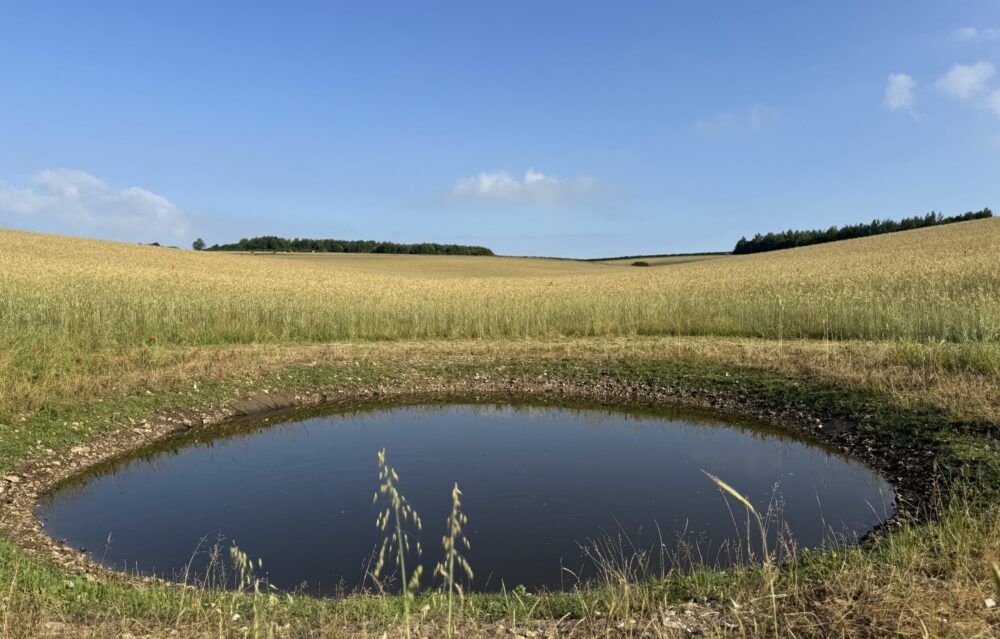
Project achievements
Sheepdrove Farm successfully completed the project and carried out more work than initially planned. Some rare plant species from the existing dormant seed bank were identified and Sheepdrove was identified by Plantlife as a Nationally Important site for arable plants. Achievements include:
- 3 dew ponds restored
- 1.12 hectares managed for arable plants
- 3 scrapes created for juniper planting and arable wildflowers
- 197 people attending guided walks and group visits.
- Interpretation boards completed
- Trail cameras installed at dew ponds to monitor wildlife
- Arable plant surveys completed
- Seed collection of two threatened species (Stinking Chamomile and Venus’s-looking-glass) donated to Kew’s Millennium Seed Bank.
Image: Restored dew pond at Sheepdrove, Rosie Treuille
Find out more
Find out more about the other projects in our Partnerships for Nature programme here, and more about Sheepdrove Farm here, and Plantlife here.

The Partnerships for Nature programme is funded by Defra’s Species Survival Fund. The fund was developed by Defra and its Arm’s-Length Bodies. It is being delivered by The National Lottery Heritage Fund in partnership with Natural England and the Environment Agency.