
Moor Copse Nature reserve near Reading is an ancient woodland with the River Pang running through it. The Site of Special Scientific Interest (SSSI) is an important habitat for rare and endangered species such as the Dormouse. Ash Dieback was causing safety issues – preventing woodland management such as coppicing from being carried out, and putting these species at risk. BBOWT completed Ash works and trained volunteers, enabling woodland management to restart and creating new habitats in ‘veteranised’ trees.
The project was part of our wider Partnerships for Nature programme, funded by Defra’s Species Survival Fund and administered by the National Lottery Heritage Fund. The programme restored and enhanced a range of important habitats for rare and vulnerable species throughout the North Wessex Downs National Landscape, and ran from 2024 until early 2026.

Creating habitat for rare woodland species
Coppicing is an important activity in many woodlands to increase diversity across the woodland and allow light to reach the ground and stimulate the ground flora. It creates low, dense vegetation which is essential for many woodland species like Dormouse and woodland birds. Coppicing is undertaken in small plots where all the understorey vegetation is cut to ground level and allowed to regrow, leaving the larger ‘standard’ trees.
At Moor Copse, coppicing in specific areas had not been possible for five years due to the risk caused by Ash Dieback. This project removed the hazard of unsafe Ash trees by the careful management of selected trees. This included ‘veteranisation’, where niches are created in the trunks and remaining branches to provide habitats for bats, birds and invertebrates. Volunteer training was an important part of the project, and included tree safety, chainsaw use and forestry first aid.
Deer fencing was funded through the project to protect coppice regrowth from browsing deer. Scrub clearance ready for a new boardwalk was also carried out – this will allow visitors to explore a currently inaccessible area of the nature reserve.
Image: Dormouse sleeping in nest by Zoe Helene Kindermann
Project Achievements
The project was successfully completed and is expected to led to increased numbers of rare species such as Dormice. Achievements included:
- 41 trees veteranised
- 3.6 hectares of woodland coppice plots restored
- 8 courses completed for volunteers, covering tree safety, chainsaw use and forestry first aid
- 486 hours of woodland management work carried out by volunteers
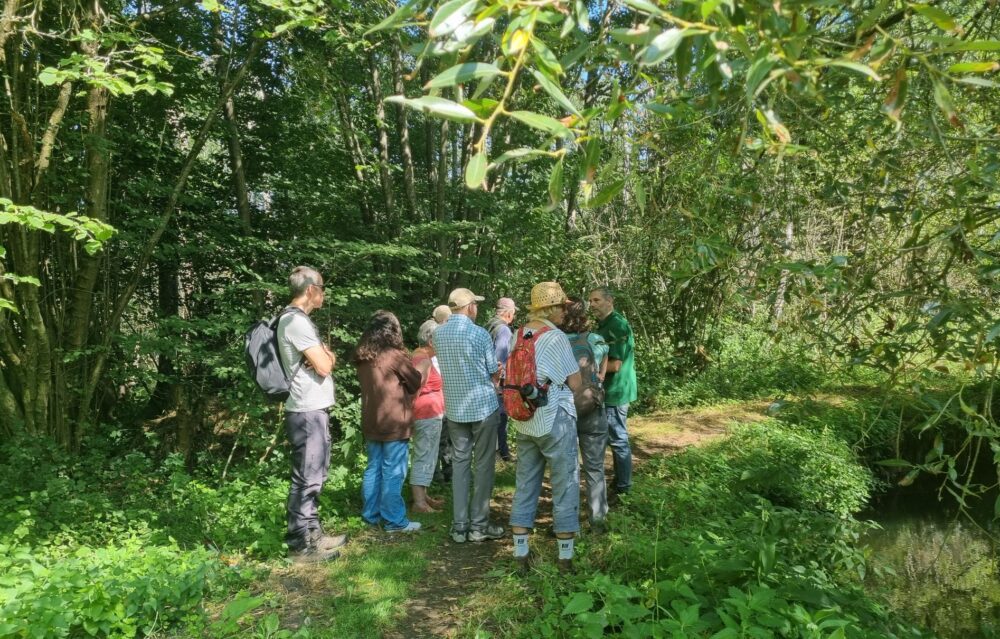
- Guided walk held and interpretation board installed to engage visitors with the woodland management work
- Long term management plan in place
Image: A walk at Moor Copse to show the work carried out, credit Jacky Akam
Find out more
Find out more about the other projects in our Partnerships for Nature programme here, and more about BBOWT and Moor Copse here
The Partnerships for Nature programme is funded by Defra’s Species Survival Fund. The fund was developed by Defra and its Arm’s-Length Bodies. It is being delivered by The National Lottery Heritage Fund in partnership with Natural England and the Environment Agency.