
Three fields at Earth Trust have been converted to demonstrate innovative, regenerative, land management best practice, showing how food production can successfully and beneficially integrate with species recovery. Around 50% of the North Wessex Downs National Landscape is arable and this approach could make vast areas wildlife-friendly for farmland birds, insects, amphibians, reptiles and plants.
The project was part of our wider Partnerships for Nature programme, funded by Defra’s Species Survival Fund and administered by the National Lottery Heritage Fund. The programme restored and enhanced a range of important habitats for rare and vulnerable species throughout the North Wessex Downs National Landscape, and ran from 2024 until early 2026.
Food production and biodiversity thriving together
Earth Trust are demonstrating that food production and biodiversity can thrive together. They have created wildflower strips along field edges to provide flower-rich habitat for insects that pollinate crops and help control pests naturally. These colourful margins support bees, butterflies, hoverflies, bumblebees, ladybirds and ground beetles, boosting biodiversity and improving crop health. These deep-rooted plants also strengthen soil structure and reduce erosion. In summer the strips buzz with life, while in autumn and winter they offer vital shelter and food, helping wildlife thrive year-round.
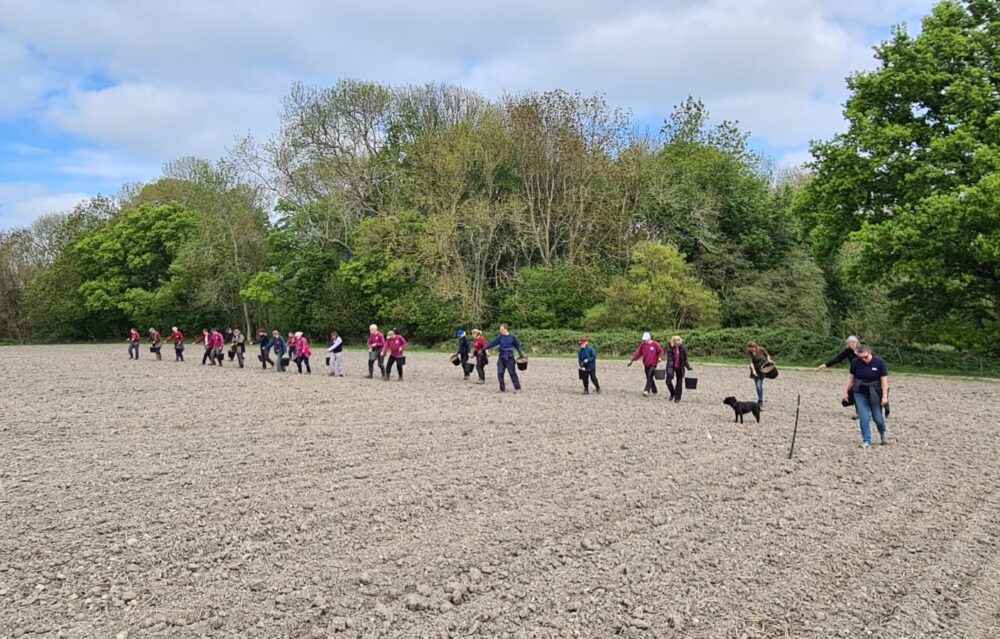
A 10 hectare area has also been sown to create a flower-rich rare chalk meadow. Seed collected from ancient, species-rich Cotswold chalk grasslands was supplied and sown with support from partners at Cotswolds National Landscape.
Image: volunteers sowing seeds
Combining trees with arable crops and grazing
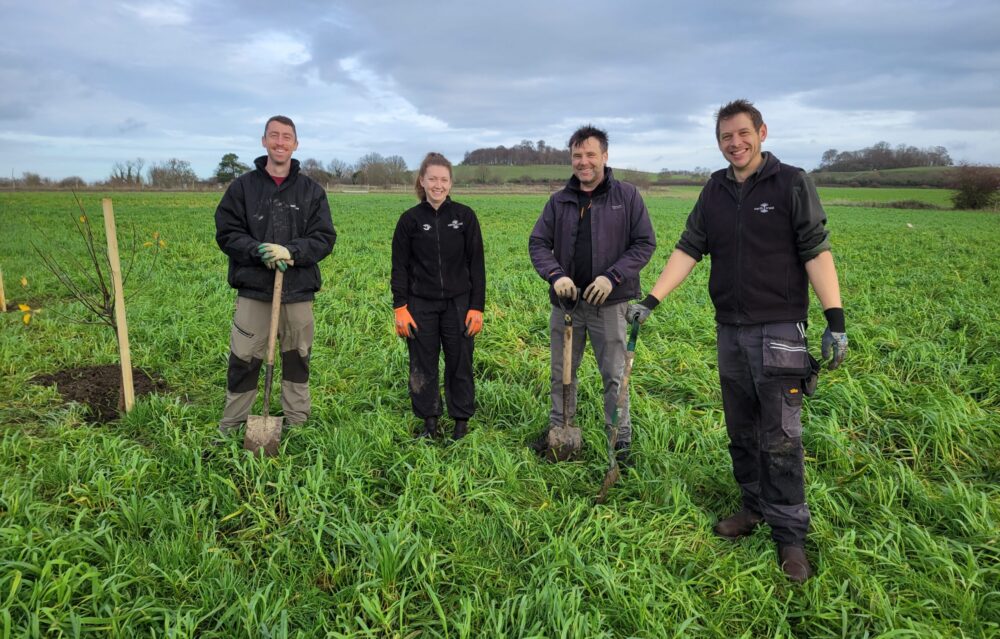
Fruit and nut trees have been planted amongst arable crops, known as Silvoarable. The apple, pear, plum and nut trees diversify income while improving crop resilience through better soil health and helping hold carbon in the soil.
Another field, used for grazing, has been planted with trees, including oak, field maple, lime and disease resistant elm, each protected by stockproof enclosures. Adding trees to pasture, called Silvopasture, benefits livestock and wildlife. As the trees mature, they’ll provide vital shade and shelter, reducing heat stress in a changing climate. The trees will become habitats for birds and insects, encouraging natural pollination and pest control. The field has also been over-sown with a diverse herbal mix to improve soil health, support pollinators and enhance grazing.
Image: the team at Earth Trust planting trees
Project Achievements
Despite delays and changes to plans due to archaeological finds the project was completed successfully, showcasing how food production and biodiversity can thrive together. Achievements include:
- 8 hectares of new flower-rich pasture created
- 1.5 hectares of wildflower in-field margins created
- 88 metres of species-rich hedgerows planted
- Planting 1 kilometre of fruit tree lines, and 400 native in-field trees in nearby fields
- Just over 1 kilometre of new trackway built to increase access for management and for the public
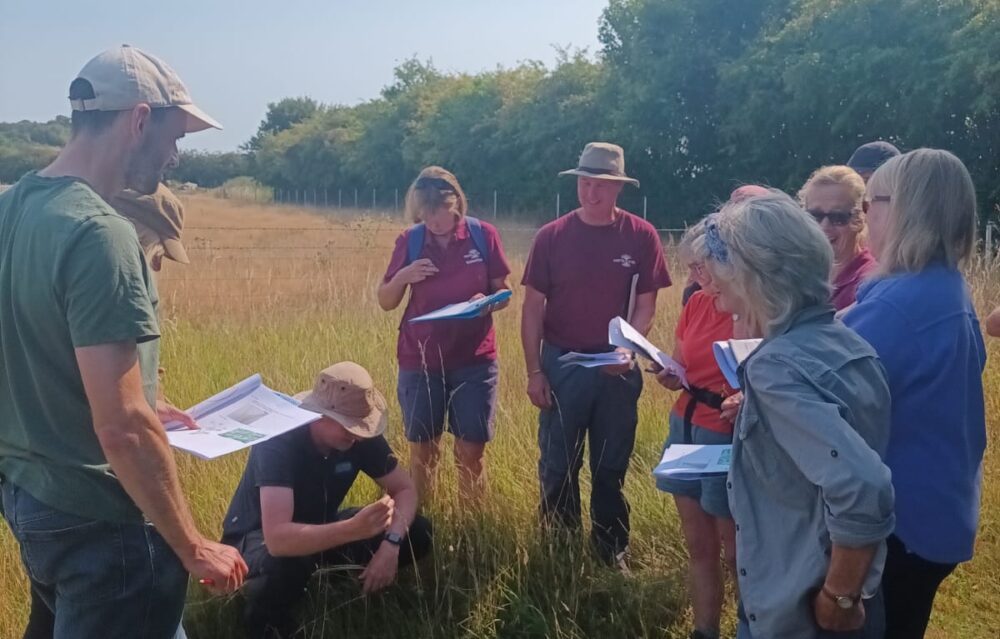
- Baseline biodiversity surveys completed and volunteers trained for ongoing monitoring.
- 37 people attended 3 walks showcasing the work taking place
- 5 training sessions for volunteers and 3 volunteer task sessions held.
- Individual practical advice provided to 22 farmers in the North Wessex Downs on nature friendly farming
- 54 attendees at workshops on topics including species recovery, agroforestry and regenerative farming
Image: ecological training day
Find out more
Find out more about the other projects in our Partnerships for Nature programme here, and more about the project at Earth Trust here
The Partnerships for Nature programme is funded by Defra’s Species Survival Fund. The fund was developed by Defra and its Arm’s-Length Bodies. It is being delivered by The National Lottery Heritage Fund in partnership with Natural England and the Environment Agency.