
The Bucklebury Estate introduced a herd of Belted Galloway cattle to carry out vital conservation grazing of restored heathland and wood pasture on Bucklebury Common – the largest area of rare lowland heathland remaining in the North Wessex Downs. The project at Bucklebury Common also supported habitat restoration by removing invasive species of holly, pollarding young trees, creating hibernacula, and restoring ponds.
The project was part of our wider Partnerships for Nature programme, funded by Defra’s Species Survival Fund and administered by the National Lottery Heritage Fund. The programme restored and enhanced a range of important habitats for rare and vulnerable species throughout the North Wessex Downs National Landscape, and ran from 2024 until early 2026.
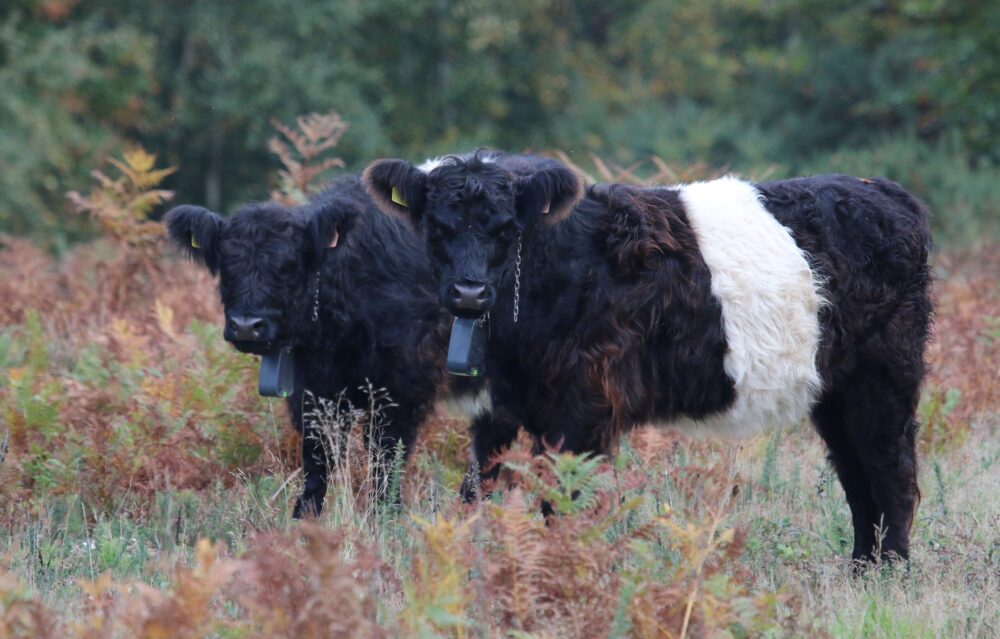
Cattle grazing on Bucklebury Common after more than 80 years
Ten Belted Galloway heifers were introduced to the Common in September 2025, which marks the first time cattle have grazed the common in over 80 years. The heifers quickly settled in and learnt the ‘NoFence’ collar system – an innovative GPS based system which allows for fenceless grazing. Members of the public can see the live location of the cattle using a QR code, enabling them to either avoid or seek out the cows.
The Common would originally have been grazed by wild herbivores and was then grazed by cattle. But since cattle grazing stopped after the Second World War the heath became overgrown with invasive birch, willow and bracken. These invasive plants have been cut back, allowing the rich flora that was once characteristic of our heathlands to recover and improving the wood pasture habitat. Young trees have also been pollarded as part of the project – trees are cut above the reach of livestock and deer, and they resprout with lots of fresh growth. This increases their longevity and provides useful resources for people and wildlife.
Image: Belted Galloway cattle at Bucklebury Common with ‘NoFence’ collars, Alex Cruickshank
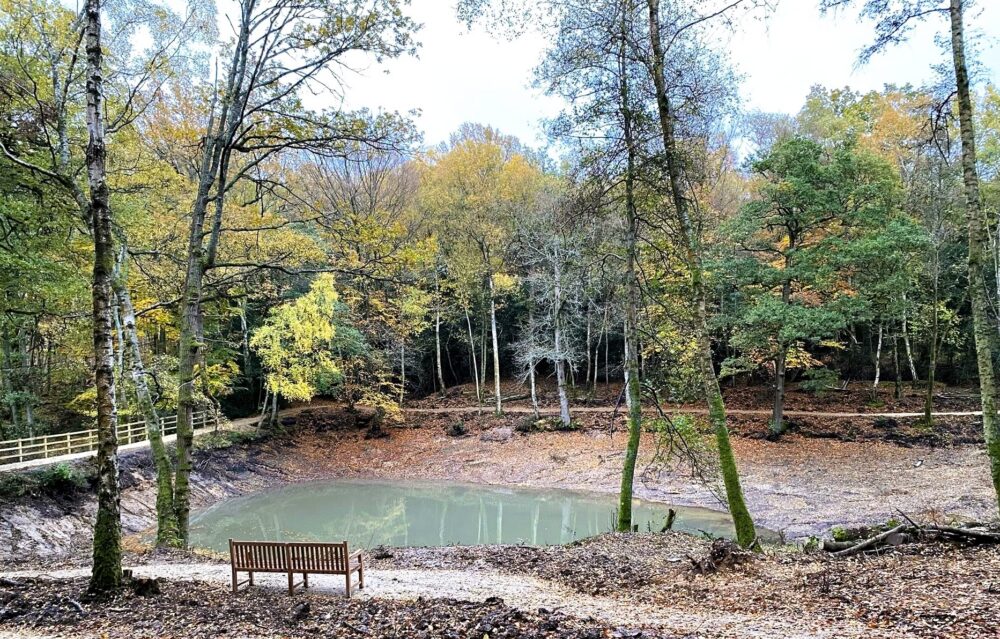
Monastic fish ponds restored
Two monastic fish ponds were restored as part of the project. Dense tree cover was thinned out to allow more light to encourage more plants and invertebrates. The ponds were dredged, removing a large volume of silt, giving the ponds more depth for a healthy ecosystem and four ‘leaky dams’ were built to help hold back water, creating additional wetland habitat. With Access funds the area has been made more accessible with an all-weather path and a new bench to rest on. Estate Ranger Sam Kerr said:
“It’s been a huge transformation for the area and we’re looking forward to seeing it flourish over the coming years”.
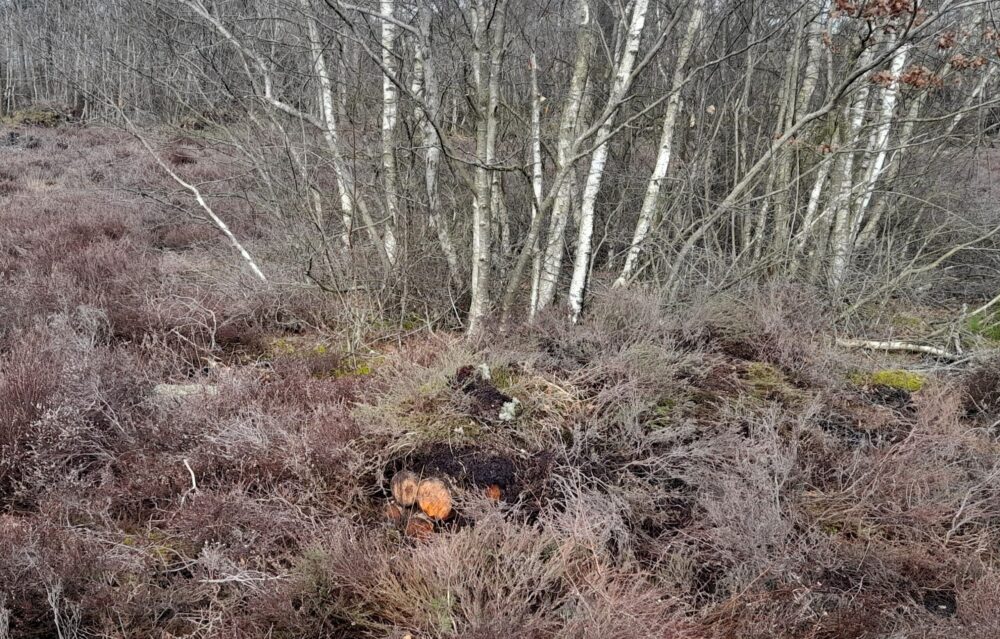
New homes created for adders
Bucklebury Common is home to a small but very important population of adders, an increasingly rare reptile. The adder is the UK’s only venomous snake, but its venom is generally of little danger to humans. Adders hibernate during the winter in structures called hibernacula. These are often natural, formed of narrow cracks in the roots of old trees, or rodent burrows. To increase the population of adders, artificial hibernacula have been built using logs and soil. These will provide additional spaces for them to hibernate safely through the winter.
There are already encouraging signs of success, with a young adder being recorded in an area they had not been seen for many years.
Project Achievements
- 10 belted Galloways introduced to enhance 257 hectares of heathland and wood pasture
- 150 new trees pollarded
- 56 hectares of wood pasture restored by removal of holly and trees
- 1 hectare of heath restored through bund removal
- 14 scrapes created
- 18 ponds created or restored
- 22 Leaky dams built
- 23 hibernacula created
- Volunteer group of cattle watchers trained
- 142 participants took part in bird surveying and volunteer tasks
- 162 participants on six walks
- Management plan in place to ensure long term success
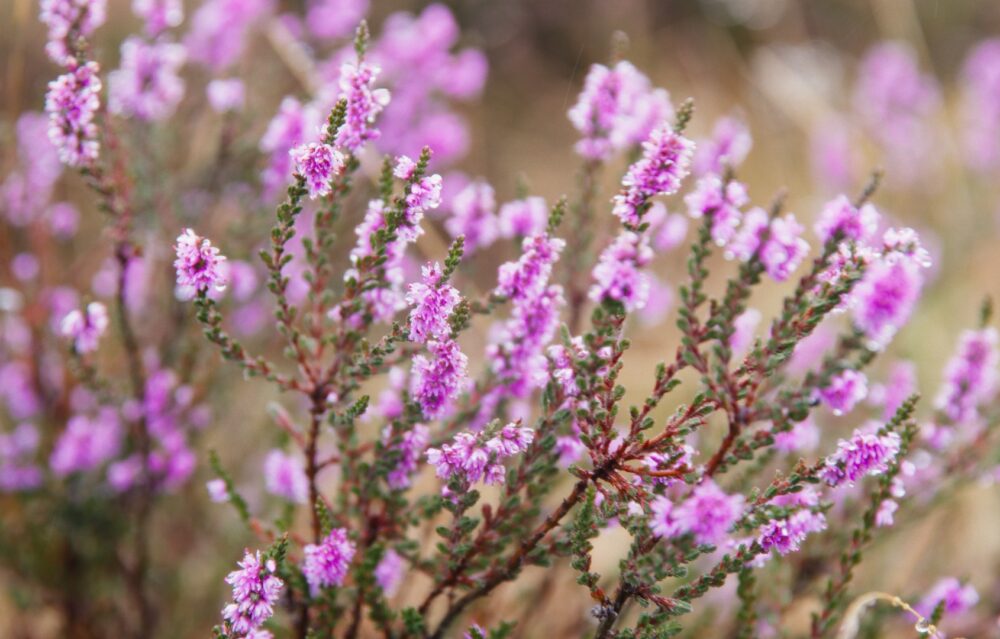
Image: heather on Bucklebury Common by Freddie Marshall
Find out more
Find out more about the other projects in our Partnerships for Nature programme here, and more about Bucklebury Common here.
The Partnerships for Nature programme is funded by Defra’s Species Survival Fund. The fund was developed by Defra and its Arm’s-Length Bodies. It is being delivered by The National Lottery Heritage Fund in partnership with Natural England and the Environment Agency.