
Following the completion of our Partnerships for Nature programme in the spring we caught up with some of our project partners to find out how nature was benefitting over the dry summer. The programme restored habitats at seven sites across the North Wessex Downs, it was funded by Defra’s Species Survival Fund and administered by The National Lottery Heritage Fund.
Restored dew ponds create a lifeline at Sheepdrove Organic Farm
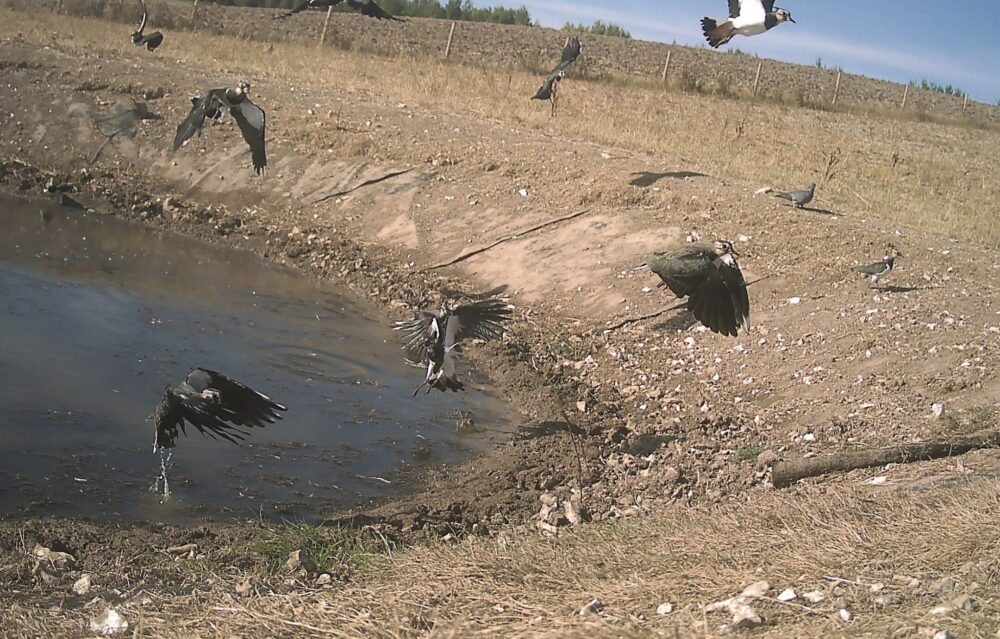
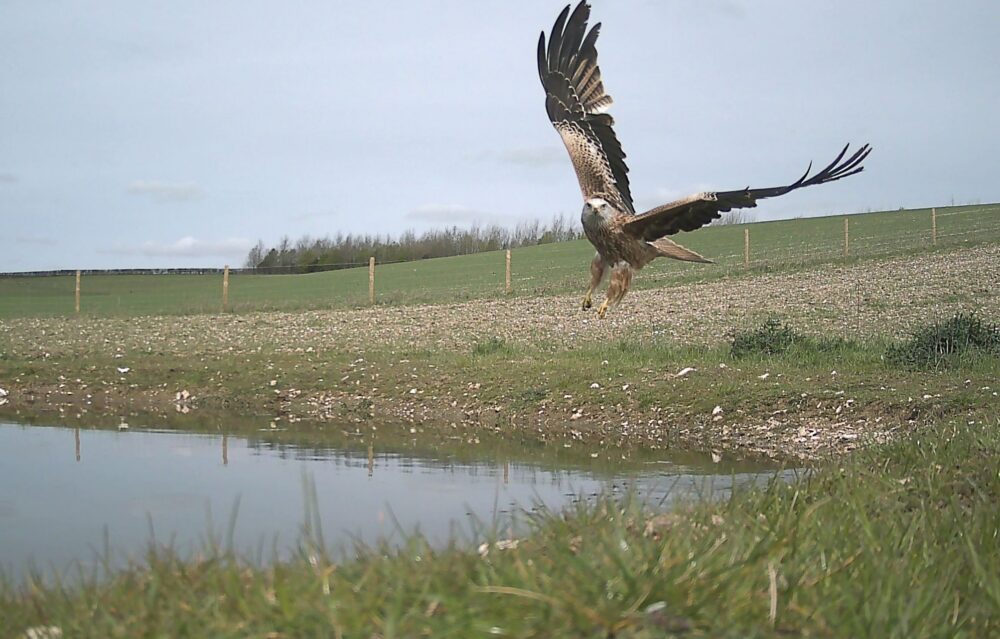
Three dew ponds at Sheepdrove Farm were restored as part of the project. Motion-activated cameras have captured a steady stream of visitors seeking out one of these restored ponds this year — including a grey partridge couple, a flock of lapwings, and a red kite.
Both grey partridge and lapwing are Red-listed on the UK Birds of Conservation Concern list — the highest conservation priority, given severe, long-term population crashes across the UK. In the drought conditions over the summer, water sources like this one aren’t just nice to have — they can determine whether farmland species survive at all.
To understand exactly how wildlife is using this pond, naturalist Nick Adams of TN Wildlife installed trail cameras to track visitors over time.
Image: lapwing, caught on the trail camera, need a reliable water source to survive
Naturalist Nick Adams explains the important role of dew ponds
“The addition of two ponds through the project at Sheepdrove have been incredibly helpful to the nearby wildlife over the exceptionally dry and hot summer. The ponds were dug to have shelves and deep areas which meant water has been available in areas it would have been absent for months. One pond has also provided mud for nest building as it dried up. Species like swallow and house martin were regularly seen collecting mud. In all these cases, the important point is the foraging distances, be it for water or mud have been greatly reduced. This speeds up the bird’s days, allowing them to move their breeding season on more efficiently. For a lot of the year, birds are on migration and need areas to stop off for a wash and brush up. This has meant more unusual species have popped up, like snipe, yellow wagtail and lapwing. By using trail cameras that react to movement, these species can be caught visiting, whatever the time of day or night.
“Mammals too are drawn to a water source, whether it’s for a drink or to look food. In the drier parts of the year, there will be limited moisture available in and on their food, so a dependable water source is very important. With the help of Partnerships for Nature, things have improved greatly for the wildlife of Sheepdrove.”
Image: red kite captured on the trail camera
New ponds on Bucklebury Common give a boost to wildlife and cattle
Samantha Kerr, Ranger on the Bucklebury Estate, gave us this update on the ponds created as part of the Partnerships for Nature project:
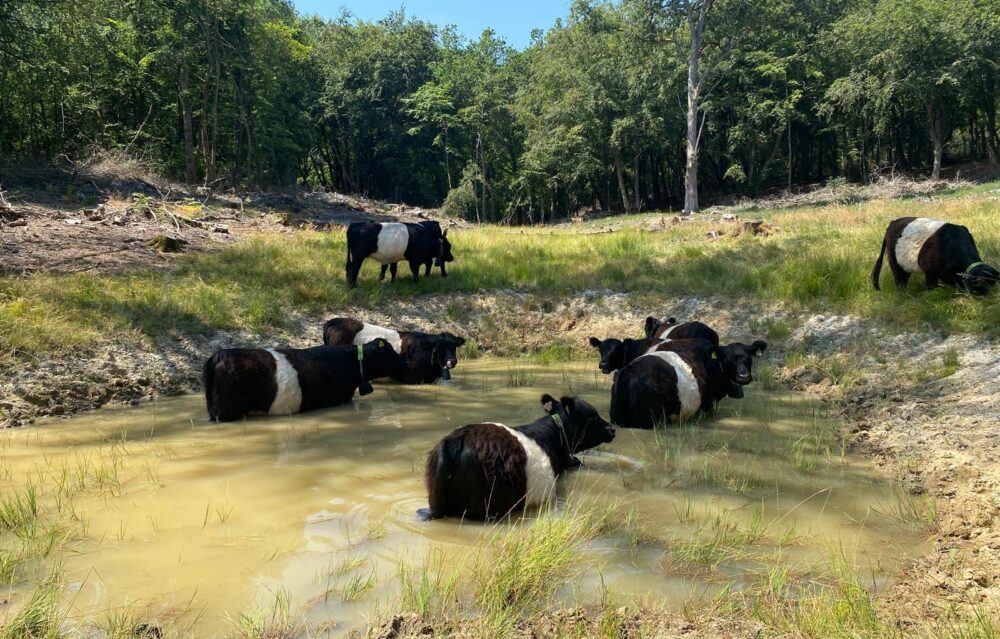
“The creation and restoration of 16 ponds across Bucklebury Common has proved to be a vital resource over the dry summer thanks to their water storage. Our herd of 10 Belted Galloway cattle particularly enjoyed cooling off in them. Beyond supporting livestock, the ponds acted as crucial refuges for wildlife, maintaining wet habitats when many natural water sources were under pressure. We had good numbers of dragonflies and damselflies – lots common darter and emperor dragonfly and demoiselles damselflies have been recorded. As part of our wider conservation programme, the ponds are helping to create a richer, more connected landscape that benefits both wildlife and visitors to the Common.”
Image: Belted Galloway cattle were introduced to carry out vital conservation grazing of restored heathland and wood pasture on Bucklebury Common, here they are enjoying cooling down in one of the new ponds.
Find Out More
Find out more about the other projects in our Partnerships for Nature programme here, and more about Sheepdrove Farm here.
The Partnerships for Nature programme was funded by Defra’s Species Survival Fund. The fund was developed by Defra and its Arm’s-Length Bodies. It was delivered by The National Lottery Heritage Fund in partnership with Natural England and the Environment Agency.