
Working with Action for the River Kennet (ARK), the Benham Estate restored 2.7 kilometres of rare chalk stream habitat, wet woodland and wet meadows on the river Kennet SSSI. The capital works – repairing the natural form and function of the river – included removing barriers to fish passage, restoring spawning habitat for brown trout and reconnecting the river to the flood plain in order to re-wet areas of wet meadow and woodland. This restores conditions enabling macrophyte and invertebrate species to recolonise. The project also enabled access opportunities to parts of the Kennet not normally open to the public, hosting training, volunteering and guided walks.
The project was part of our wider Partnerships for Nature programme, funded by Defra’s Species Survival Fund and administered by the National Lottery Heritage Fund. The programme restored and enhanced a range of important habitats for rare and vulnerable species throughout the North Wessex Downs National Landscape, and ran from 2024 until early 2026.
River restoration
Chalk streams are rare and unique habitats that can be home to an incredible array of flora and fauna. Healthy chalk streams are vital for healthy ecosystems and healthy people. Their health depends on clean water, natural flow and natural habitat.
The river Kennet on the Benham Estate is designated a Site of Special Scientific Interest (SSSI). However, historical activities including impoundments, diversions and dredging have degraded habitats, limiting the ecological potential of the river and its floodplain and impacting the status of the SSSI.
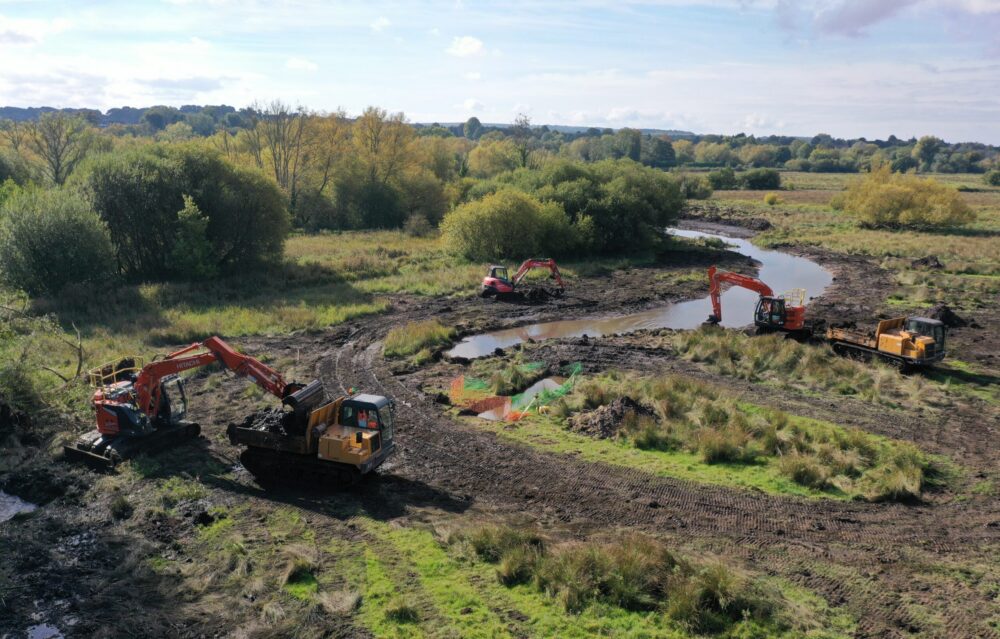
Following a survey, assessment and recommendations in 2022, Partnerships for Nature funding was awarded towards the first two phases of a habitat restoration plan. Work included restoring the slope and shape of the riverbed and river banks, creating a new channel to connect the river to the floodplain and restoring the sinuosity of the river. Large woody material was also added to create habitat niches and cover for fish.
Image: Phase one of river restoration work, ARK
Volunteer support
Volunteers played a key part in delivering the project. Organised by ARK, existing and new volunteers were given the opportunity to get involved in practical volunteering days, as well as surveying and monitoring. Volunteers gave over 2,000 hours of their time in total to help on the project.
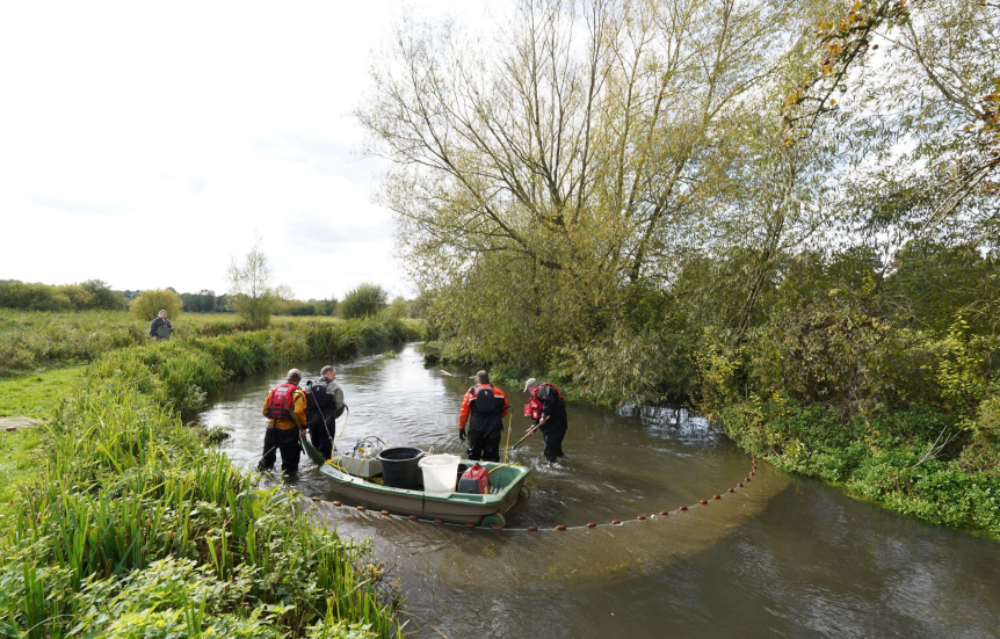
As part of the project ARK purchased electric fishing equipment and trained staff and volunteers to use electric fishing to monitor the river restoration works. Although it might sound extreme, electric fishing is a technique widely used by scientists and fishery managers to survey rivers and assess and monitor fish populations. It involves passing a mild electrical field through the water to immobilise fish allowing them to be carefully captured, examined, and released unharmed. The training provided for volunteers means that they will have the skills needed to continue their support beyond the end of the project.
Image: electrofishing, ARK
Archaeological finds
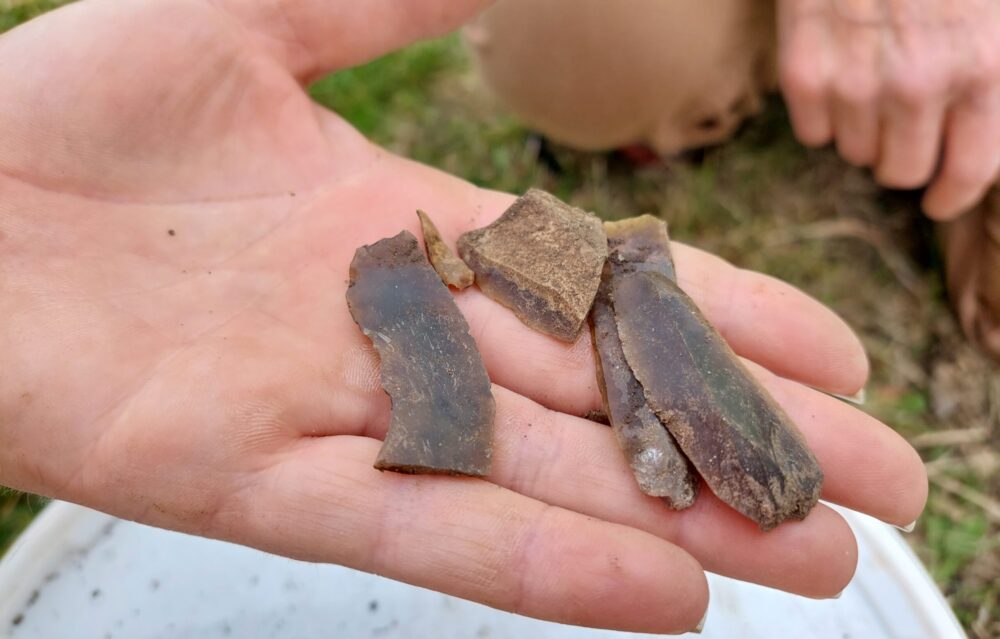
Archaeology investigations prior to works starting revealed some important finds. The quantity and fresh quality of the prehistoric flints found showed the regional archaeological significance of the site. Some of these flints are Palaeolithic, left at this location sometime after the last ice age between 11,600 and 7000BC.
It is thought that hunter-gatherer communities would have been drawn to this gravel island seasonally, and over many centuries. It offered a drier refuge compared to the surrounding low-lying wetlands – an ideal stopover for making flint knapping in preparation for the next hunt.
Investigations also uncovered a multitude of early prehistoric features including Bronze Age ditches, pits, a water hole and burnt mound material. While these types of features had an important practical function for Bronze Age farmers, watery places often held special significance for our ancestors in other ways too.
Project achievements
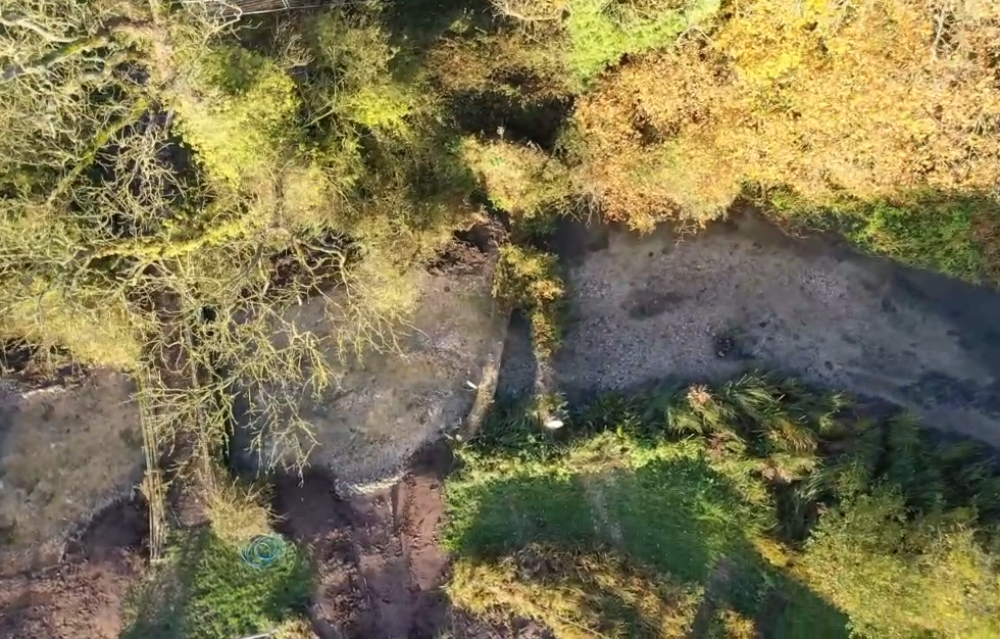
Despite challenges due to archaeological finds and bad weather the project was successfully completed, leading to significant instant habitat improvements. Achievements include:
- 2.7 kilometres of chalk stream habitat restored and enhanced and 2.9 kilometres of riverbank habitat regraded
- River and floodplain reconnected to create 7.7 hectares of wet woodland just over 6 hectares of wet grassland
- 3 ponds created from gravel pits providing habitat for wading birds and other wildlife
- Fish surveying equipment bought and training completed for ARK staff and volunteers
- 42 NoFence for cattle grazing management of the water meadows purchased, and seeds for reseeding in Spring 2026
- Volunteers gave over 2,000 hours of their time to support the project
- 35 surveying sessions completed by volunteers, and 9 training sessions for staff and volunteers.
- Expertise was shared, including a visit to the Estate by riparian owners and riverkeepers to see the work at Benham.
- Over 200 ARK members and members of the public attended guided walks to see the work.
Image: drone image of a restored section of the River Kennet
Find out more
Find out more about the other projects in our Partnerships for Nature programme here, and more about the project on the Benham Estate here, or more about Action for the River Kennet
The Partnerships for Nature programme is funded by Defra’s Species Survival Fund. The fund was developed by Defra and its Arm’s-Length Bodies. It is being delivered by The National Lottery Heritage Fund in partnership with Natural England and the Environment Agency.